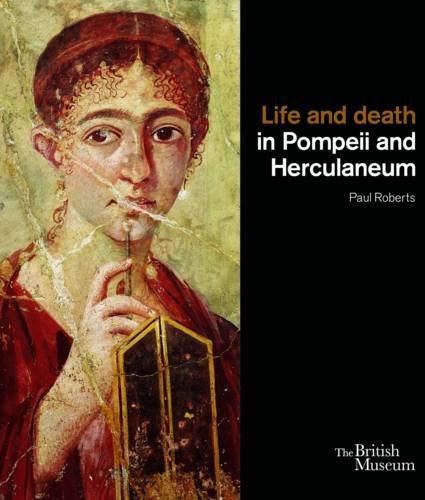
Life and Death in Pompeii and Herculaneum
Paul Roberts
Cost:
British Museum: £25 (With free copy of 'Art in Pompeii and Herculaneum')
British Museum Website: £25
Amazon (UK): £16
British Museum: £25 (With free copy of 'Art in Pompeii and Herculaneum')
British Museum Website: £25
Amazon (UK): £16
In this final post on the British Museum's 'Life and Death in Pompeii and Herculaneum' exhibition, we turn to look at the accompanying book of the same name. This hefty volume, written by the exhibition curator, Paul Roberts, is a work of art well worth the asking price. Over the course of 320 glossy pages, Roberts reconstructs the daily lives of the people who once inhabited Pompeii and Herculaneum. The objects of the exhibition feature heavily in the form of 400 photographs and figures, used to great effect to illustrate points and support arguments. For the academic and the intrigued, footnotes are used extensively, allowing you to follow up on Roberts' assertions and get into the nitty gritty of Roman history. For this reason, the book is a must-have for both casual readers and academics alike.
After beginning with a brief introduction of the Vesuvian sites, we are taken inside the city walls and dropped off outside a Roman house. Throughout the course of the book, Roberts acts as our guide, starting first with the shops, then the atrium, the bedroom, the garden, the dining room, the kitchens, toilets, and baths. The book's real emphasis is on life inside the Roman household - sure, we're told about how the rooms were decorated, but we're also told how people might dress or do their hair, or who did the cooking and how they did it. Everybody gets a look in, from the slaves and urban poor to the merchants and magistrates who ruled the towns. We finish, as might be expected, with a chapter on the eruption, meeting some of those unfortunate souls who fell victim to the volcano's blast.
Benefiting from beautiful pictures, a wealth of scholarship, and the most up-to-date research, 'Life and Death in Pompeii and Herculaneum' provides one of the best introductions to both the Vesuvian sites and day-to-day Roman life I've yet encountered. If you can visit the exhibition, this book builds beautifully upon what you've already seen. For those who can't, it's a worthy alternative to trekking to London, showing you the best that the exhibition has to offer without the hustle and bustle of the crowds. With so much on offer, it's all too easy to lose a few hours turning page after page after page.


