Showing posts with label Reviews. Show all posts

Friday, 12 April 2013

Life and Death in Pompeii and Herculaneum - The Book


Life and Death in Pompeii and Herculaneum

Paul Roberts

Cost:
British Museum: £25 (With free copy of 'Art in Pompeii and Herculaneum')
British Museum Website: £25
Amazon (UK): £16

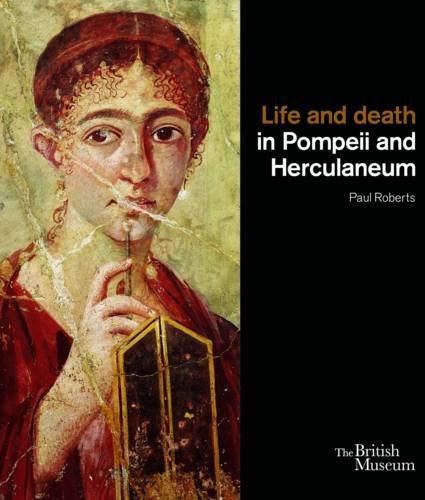
In this final post on the British Museum's 'Life and Death in Pompeii and Herculaneum' exhibition, we turn to look at the accompanying book of the same name.  This hefty volume, written by the exhibition curator, Paul Roberts, is a work of art well worth the asking price.  Over the course of 320 glossy pages, Roberts reconstructs the daily lives of the people who once inhabited Pompeii and Herculaneum.  The objects of the exhibition feature heavily in the form of 400 photographs and figures, used to great effect to illustrate points and support arguments.  For the academic and the intrigued, footnotes are used extensively, allowing you to follow up on Roberts' assertions and get into the nitty gritty of Roman history.  For this reason, the book is a must-have for both casual readers and academics alike.

After beginning with a brief introduction of the Vesuvian sites, we are taken inside the city walls and dropped off outside a Roman house.  Throughout the course of the book, Roberts acts as our guide, starting first with the shops, then the atrium, the bedroom, the garden, the dining room, the kitchens, toilets, and baths.  The book's real emphasis is on life inside the Roman household - sure, we're told about how the rooms were decorated, but we're also told how people might dress or do their hair, or who did the cooking and how they did it.  Everybody gets a look in, from the slaves and urban poor to the merchants and magistrates who ruled the towns.  We finish, as might be expected, with a chapter on the eruption, meeting some of those unfortunate souls who fell victim to the volcano's blast.

Benefiting from beautiful pictures, a wealth of scholarship, and the most up-to-date research, 'Life and Death in Pompeii and Herculaneum' provides one of the best introductions to both the Vesuvian sites and day-to-day Roman life I've yet encountered.  If you can visit the exhibition, this book builds beautifully upon what you've already seen.  For those who can't, it's a worthy alternative to trekking to London, showing you the best that the exhibition has to offer without the hustle and bustle of the crowds.  With so much on offer, it's all too easy to lose a few hours turning page after page after page.

Wednesday, 10 April 2013

Life and Death in Pompeii and Herculaneum - Highlights

With hundreds of items on display, Life and Death in Pompeii and Herculaneum is a treasure trove for anybody with even the slightest bit of interest in Roman history.  This makes picking 'highlights' rather difficult.  To make things easier, and because this is a Roman food website, my first five items are related to Roman wining and dining.  To show that there's more to life than just food, however, I've included three bonus objects at the bottom.  To all those lucky enough to attend, have fun hunting them out.  To all those unable to go, here's a taste of what is on show:


1) Placentarius - Cake Tray


© Trustees of the
British Museum
I can only imagine the laughs that this cheeky little chap got as he was carried out after dinner, laden with all the honey stuffed dates and sweet treats you could ever want.  With one foot forward and a wry smile on his face, you get the impression that he was trying to run away with dessert.  Clearly caught out, he looks up at the diner, hand raised in defence as if to say, "Me?  Steal dessert? Never!"  Others imagine that he is singing the praises of whatever treats he happened to be carrying.  Either way, grab what you can before he's gone!


2) Carbonised Food


© SANP
As good as any Roman recipe is, this is the only actual Roman food you're ever going to see.  On display are the carbonised and mineralised remains of the figs, dates, nuts, and grains used to prepare meals in the two cities' final days.  Holding pride of place amongst the over-cooked foods is the carbonised loaf of bread found in Herculaneum.  It is stamped 'Property of Celer, slave of Quintus Granius Verus'. Does this stamp tell us that Celer worked in Granius' bakery and baked the bread, or does it tell us that the finished loaf was to be collected by the slave?  It's hard to say.  For a Roman food lover, these items are invaluable - for example, they confirmed that the grain resembled semolina or bulgur wheat, which is what we used when preparing ancient porridge.


3) Drinking Horn


©SANP
Drinking was serious business in the ancient world; the vast array of drinking objects on display in this exhibition alone is testament to that!  There were amphorae for storing, jugs for pouring, jars for mixing, and cups, bowls, and horns for drinking.  At the wildest parties, according to Horace (Satires, II.6), one man was made the rex bibendi, or 'King of the Drinks', and could dictate how much, how often, and how quickly you drank.  Ten letters in your name?  That's ten cups for you!  Want to show off?  Why, drink from a horn of course!  At the exhibition you can find a fresco of a man doing just that, as well as the pictured drinking horn itself.


4) Skeleton Butler


©SANP

The meaning of the Skeleton Butler is perhaps best illustrated by a story in Horace's Satires; in this story a mouse from the city tries to convince his country bumpkin rodent friend to abandon his hard life in the countryside, and to enjoy a life of wining and dining in the city.  The city mouse, a rather eloquent chap, says:

"All earthly creatures have been given mortal souls;
large or small they have no means of escaping death.
So, my dear friend,while there's still time, enjoy the good things
of life, and never forget your days are numbered." - Horace, Satires, II.6

We're all going to die, so why not enjoy life first?  With a skeleton pouring your next cup of wine, how could you possibly forget?


5) Glirarium - The Dormouse Jar

©SANP

You have this great house at the bottom of a jar.  Even better, once a day a hand appears from the heavens and drops some acorns in at the top!  You roll out of your cosy straw nest, stretch a bit, and then scamper up to the top of the jar to get some treats.  Scampering is getting quite tough, as you're putting on a lot of weight, but that doesn't matter too much - you're living the dormouse dream.  That kind, gift-giving hand starts to reach into the jar again.  More treats already?  Not this time - before you can say 'squeak' you've been scooped up, thrown into a pan, covered in honey, peppered with poppy seeds, and gobbled up by some wealthy senator.  Your house, it turns out, was a glirarium, used solely to fatten up dormice for eating.


6) Furniture


When I first visited the Vesuvian sites, they moved me.  Until that point I was used to roving through ruins which were ankle-high and left an awful lot to the imagination, but here were the actual houses which people lived in, the brothels they loved in, the bakeries they ate in, and the baths they washed in. These buildings had  doors and stairs and decorations which people opened, climbed, and admired.  What I found most moving, however, was the furniture - something once touched by Roman hands - and Life and Death in Pompeii and Herculaneum has it in abundance.  There's a sturdy chest where the master of the house stored his documents and valuables; the chair his wife sat on when brushing her hair; the cradle in which his son lay, slept, and sadly died.  My favourite piece of furniture is the table shown - we see a similar one pictured in this fresco, laden with jugs of wine.  Charred and damaged this furniture might be, but there's a lot of life left in it yet.


7) Fresco of Terentius Neo and his wife


With history it is usually a case of us looking in at the past, but with this fresco we find two Romans staring back out at us.  Posing for us are Terentius Neo, a Pompeiian baker with a patchy beard, and his good lady wife.  Terentius has donned a toga, suggesting that he has embarked on a career in Pompeiian politics.  His wife wields a wax tablet, used by Romans for writing and recording the day's dealings - perhaps she took over the running of the bakery?  Whatever message the painter is trying to convey, I think that this fresco is a must-see, as it affords us a rare look at two real-life Roman citizens.


8) Pompeiian Plaster Casts


© Trustees of the British Museum

Nothing is so synonymous with Pompeii as the plaster casts of the dead.  When Vesuvius erupted, a column of ash rose into the air, growing higher and higher and higher still.  Eventually this column collapsed, and clouds of  hot gas and burning ash raged through the Campanian countryside as pyroclastic flows.  The one that hit Herculaneum was hot enough to burn bodies to the bone.  The one that hit Pompeii, however, was not.  Those that died lay as they fell, buried by ash and stone and volcanic debris.  This soon set, and although the bodies buried within decayed, their every little detail was imprinted in the ash.  The casts we see today were created when some bright spark decided to pour plaster, and later resin, into the hollows.  The British Museum is displaying several casts, ranging from a little doggy to a whole family.  By the time you get to the casts at the exhibition's end, you've seen the lives these people led, and if you're like me, you've grown quite fond of them.  To then stare into what would have been a father's eyes, or watch as his child claws at walls which are no longer there, is quite a harrowing and humbling experience.
Sunday, 7 April 2013

Life and Death in Pompeii and Herculaneum (British Museum Exhibition)


Last week I travelled to London to visit the much anticipated 'Life and Death in Pompeii and Herculaneum' exhibition at the British Museum.  Many of you messaged me, looking to know how it was, and whether or not it is worth trekking to London to see.  I figured that, over the course of three posts, I'd write a little bit about my visit and what I learnt from it.  This first post is a review of the exhibition as a whole - its content, its arrangement, and how it is to actually walk around.  It is followed by a post featuring some of my exhibition 'highlights' - needless to say this will have a culinary bent to it.  The final post will be review of the companion book, also called 'Life and Death in Pompeii and Herculaneum' - a worthy souvenir for all who visit the museum, and great alternative for those who can't.

The Essentials


  • Dates: 28th April - 29th September 2013
  • Price: £15 (Adults & Oldies), £12.50 (Students, Unemployed, Disabled, & Groups), Free (Members and U16s)
  • Online Ticket Booking - This is essential
  • No Photography :(


The Exhibition


I have been to Pompeii, Herculaneum, and the National Archaeological Museum in Naples twice, and can still safely say that this is the greatest collection of Roman artefacts I have ever seen - the museum in Naples must be awfully empty whilst this exhibition is on!

Photo: Soperintendenza Speciale per i beni Archelogici di Napoli e Pompei

'Life and Death' is a showcase of the domestic, something reflected in the very layout of the exhibition itself; everything is arranged according to the plans of a well-to-do Roman house.  You start off flanked by the shops commonly found at the front of Pompeiian houses, process into the atrium where the family showcased their wealth and pedigree, and are then free to wander into the more private bedroom, garden, and dining areas.  The exhibition ends with you fleeing this house, as the Pompeiians did in 79 A.D.  Pretty soon you start to find the money they dropped and the lamps they struggled to light, before catching up with them, or rather their plaster casts, at the exhibition's exit.

Photo: Soperintendenza Speciale per i beni
 Archelogici di Napoli e Pompei

The hundreds of items on show have been perfectly chosen, breathing life into the various rooms you wander through -  here is the beautifully crafted stool a Roman matrona sat on, and there is the elegant silver mirror she used when brushing her hair.  So many of these items are familiar to us today - toothpicks, razor blades, dice, perfume, spoons - which is why you can't help but feel a sense of attachment to the people who used them, and which is why the sight of their tortured forms at the exhibition's end is so heartbreaking.

Photo: © Trustees of the British Museum


The Experience


The exhibition is undoubtedly a masterpiece - it brings the Roman world to life in a way which can be hard to do.  Unfortunately, my experience was far from perfect.  Despite the use of ticket-booking and time-slots, the exhibition was over-filled; even half the number of people would have been far too many.  My girlfriend and I were jostled from one artefact to the next, pushed around by tour-groups full of people who didn't want to be there, often unable to see items or read about them.  At times this exhibition felt more like a bad queue than an exploration of the Roman house.

However, whilst my experience was far from ideal, I still stand by all that I said above - this really is the best collection of Roman artefacts I have ever seen.  And, when the disgruntled and uninterested tourist with the big hair and two backpacks finally moves to the side, that glimpse of a silver spoon from Herculaneum really does make it all worth it.

Some Spoons
Photo: © Trustees of the British Museum

My advice for all who want to visit 'Life and Death in Pompeii and Herculaneum' is to go, but to do so in the middle of the week at the start of the day when things are that little bit more quiet.  For those who can't make it, the exhibition book, also titled "Life and Death in Pompeii and Herculaneum", is a stunning alternative.

Some Other Reviews


Friday, 19 October 2012

Cooking Apicius

Review of Sally Grainger's Cooking Apicius, (Totnes, 2006) - This can be bought on Amazon.

Perhaps the name most often associated with Roman cooking is Apicius, the Roman gourmand who dined with emperors and set sail in search of the finest of foods (or so the stories go).1 Our only surviving Roman recipe book, known variously as Apicius and de re coquinaria, is attributed to this lover of luxury, but as Sally Grainger argues, this is not the case.

Grainger's book, Cooking Apicius, is not a translation of the aforementioned Roman recipe book - she does this elsewhere.  Rather, Grainger has assembled some of the best and most readily accessible recipes from that volume, omitting the overly lavish and the downright complicated.  As mentioned elsewhere, Roman recipes are often very vague and include neither measurements nor timings; here the author has, through experimentation, arrived at what she considers to be the quantities and methods most likely to work.  Some of these recipes require rather unusual ingredients such as liquamen (a variety of Roman fish sauce), defrutum (a grape must syrup), asafoetida (a resin found in Afghanistan and India), and rue, the bitter herb which we saw in the moretum recipe.  Grainger provides excellent information on procuring or making these ingredients for yourself.

My favourite bit about the book is the introduction Grainger gives on Roman cooking, and on the Apicius of the title.  She argues very convincingly that this was not the same Apicius as the gourmand mentioned above.  Roman food writers liked to talk about the origin, status, and quality of foods - they remain detached from the actual preparation, something suited to slaves and freedmen.  Grainger believes that the Apicius collection was compiled over time by cooks in the elite households - it is a text for fellow cooks.  Because the person called Apicius was renowned as a gourmand, so his name came to represent fine dining, and became attached to the recipe collection he is incorrectly assumed to have written.

This is a book I am looking to delve into, and I cannot wait to see what recipes it has in store for me.

Footnotes

1)  Athenaeus, Deipnosophistae, 1.7